The moment after a crash is rarely clear. Your heart is racing, traffic is moving around you, and you are trying to figure out what needs to happen first. In that situation, accident towing service Edmonton drivers rely on is not just about moving a damaged vehicle. It is about getting help fast, protecting your car from further damage, and making a stressful situation feel manageable.
When a collision happens, the right towing response can make a real difference. A rushed hookup, poor vehicle handling, or vague pricing only adds to the problem. What most drivers need is simple – a professional team that shows up quickly, secures the scene as safely as possible, handles the vehicle with care, and explains the next step clearly.
Why accident towing is different from regular towing
Not every tow is the same. A car with a dead battery in a parking lot is one thing. A vehicle that has been hit at an intersection, pushed into a curb, or left with damaged suspension is another.
After an accident, hidden damage matters. Even if the vehicle still rolls, it may not be safe to pull using the wrong method. Steering components can be bent, tires may be compromised, fluids could be leaking, and underbody damage may make loading more delicate than it looks. That is why accident towing service in Edmonton should focus on safe recovery first, not just speed.
There is also the human side of the call. Drivers involved in a collision are often shaken, frustrated, or unsure what comes next. A dependable towing company understands that this is not a routine errand. It is an emergency service call, and the tone matters almost as much as the equipment.
What to do before the tow truck arrives
If you are physically able and it is safe to do so, start with the basics. Move yourself and any passengers to a safer location away from traffic. Turn on hazard lights. If the vehicle cannot be moved, stay alert to surrounding traffic and follow local emergency guidance.
Next, document the accident if conditions allow. Take photos of the vehicle position, visible damage, license plates, and the surrounding area. Exchange information with the other driver and speak with police if required. If the car is not safe to drive, arranging accident towing service Edmonton motorists can count on should be one of the next calls.
This is also the right time to think about destination. Some vehicles need to go straight to a collision repair facility. Others may need temporary storage or transport to a location approved by insurance. A good towing provider will ask the right questions and help you avoid unnecessary delays.
How professional accident towing service Edmonton drivers trust should work
A proper accident tow starts before the vehicle is even loaded. The operator should assess the damage, the wheel condition, the position of the vehicle, and any obstacles around it. That assessment determines whether standard loading works or whether recovery tools, skates, dollies, or a winch are needed.
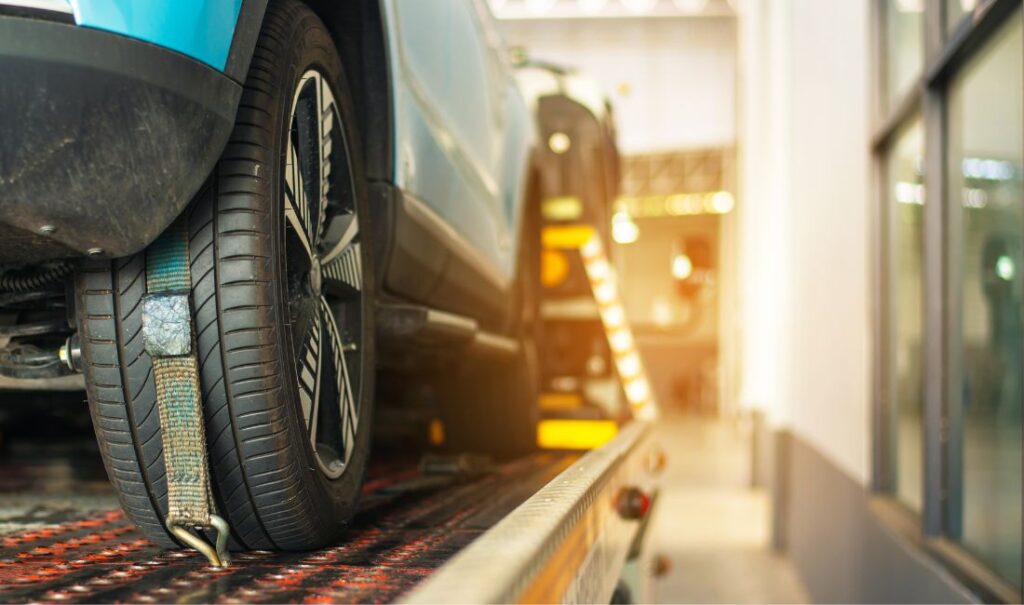
Flatbed towing is often the best option after a crash because it keeps the entire vehicle off the road. This reduces the chance of more wear on damaged tires, suspension, or drivetrain components. For luxury vehicles, motorcycles, and low-clearance cars, careful loading is even more important. The difference between experienced handling and careless handling can show up later as added repair costs.
Professional accident towing also means clear communication. You should know where the vehicle is going, what the expected charges are, and whether any special handling is required. During a stressful roadside situation, that kind of clarity helps people feel back in control.
Common accident scenarios and why the tow method matters
Rear-end collisions can look minor and still leave serious suspension or frame-related issues. A front-end impact may damage steering or cooling components, making it unsafe to move the vehicle at all. Side-impact crashes often create wheel or axle concerns that require extra care during loading.
Then there are more difficult recoveries. A vehicle may end up in a ditch, against a barrier, on a median, or stuck on a curb after impact. In those cases, towing and recovery overlap. Winching, stabilization, and controlled extraction become part of the job. Speed still matters, but so does patience. The fastest possible move is not always the safest one.
That is one reason local experience matters. An Edmonton operator who understands winter roads, heavy traffic corridors, and common crash conditions can often make better decisions on scene. Snowbanks, ice, and reduced visibility change the recovery process, especially during Alberta winters.
Pricing, timing, and what drivers should expect
After an accident, most people want two answers right away – how soon can you get here, and how much will it cost? Those are fair questions. The honest answer is that it depends on location, traffic, road conditions, vehicle damage, and whether recovery equipment is needed in addition to towing.
What should not vary is transparency. Reliable service means explaining the charge structure before the tow begins whenever possible. If a vehicle is badly positioned or requires special recovery, that should be communicated clearly. Surprise fees only make a difficult day worse.
Response time also depends on demand. A 24/7 towing company may still face delays during storms, rush hour collisions, or citywide weather events. What matters is getting realistic updates and knowing your call is being handled. Calm communication goes a long way when you are standing roadside after a crash.
Choosing the right accident towing company in Edmonton
If you need help now, you probably do not have time to research ten companies. Still, a few things are worth paying attention to. Look for a provider that offers true emergency response, not limited-hour dispatch with vague availability. Local coverage matters too, especially if you are outside the downtown core or in surrounding areas.
Vehicle handling should be part of the conversation. That is especially true if you drive a luxury car, motorcycle, SUV, or lowered vehicle. Not every tow call requires specialized transport, but after an accident, experience with different vehicle types can prevent additional damage.
It also helps to work with a company that does more than basic towing. Sometimes the issue after a crash is straightforward transport. Other times the scene calls for recovery, tire help, battery assistance, lockout service, or support coordinating the next move. A full-service roadside team can solve more of the problem in one call.
For many local drivers, that is why companies like X Towing & Recovery INC stand out. The value is not only in getting a truck to the scene. It is in fast dispatch, careful loading, professional communication, and support that feels steady when the situation is not.
Protecting your vehicle after the tow
The tow itself is only one step. Once your vehicle is moved, the next decision is where it goes and what happens after drop-off. If repairs are needed, make sure the destination is confirmed clearly. If insurance is involved, keep records of where the vehicle was taken, when it was picked up, and any charges discussed.
You should also remove valuables and essential personal items when safe to do so. Phones, wallets, work equipment, and documents are easy to forget when adrenaline is high. If the car is going to a repair shop or storage location, taking a few minutes to gather what you need can save a lot of frustration later.
Photos remain useful here too. Capture the condition of the vehicle before transport if possible. Professional towing companies work carefully, but documentation is still a smart habit after any collision.
When roadside help is enough and when towing is the safer choice
Not every post-accident situation ends with a full tow. A minor incident might leave a driver with a flat tire, drained battery, or lockout issue unrelated to major damage. In those cases, roadside assistance may be enough to get things moving again.
But if there is any doubt about drivability, towing is usually the safer decision. Strange noises, fluid leaks, steering issues, airbag deployment, bent wheels, or warning lights after impact are all signs that driving could make things worse. Saving a short tow today can lead to a much larger repair bill tomorrow.
That is the practical trade-off. People naturally want to avoid extra cost and disruption. Yet after a collision, caution is often the more affordable choice in the long run.
A crash can throw your whole day off in seconds. The right towing response will not erase that, but it can bring order back to the situation, protect your vehicle, and help you move forward with a little less stress.